

Deciding to go for laser for hair removal should be a straightforward decision, yet today it’s still one of the most misunderstood aesthetic treatments on the market, especially here in South Africa. From horror stories posted on TikTok to outdated information still circulating on other social media platforms, many people still base their expectations on myths as opposed to medical reality.
Of course, we know that it is older systems, at-home devices, and untrained operators that have all contributed to this mass confusion, and as a sad result, many clients walk into their first session appointment unsure of what to expect from laser for hair removal.
The truth, we can assure you, is that modern lasers are safe, more effective, and more advanced than ever before. A proper understanding of how laser for hair removal works and what can affect your results are a key component to long-term results. So, before you book with us at NuSkinnovation, let’s separate fact from fiction, so you can make a happy, informed, and confident choice for your skin.
The Quick Science Behind How Laser For Hair Removal Actually Works
The Hair Follicle, Light, and Melanin
At the core of laser hair removal is a scientific principle known as “Selective Photothermolysis”, which is a precise method by which a laser can deliver a focused beam of light that targets hair follicles while leaving the surrounding skin areas untouched.
In simple terms, the laser emits a beam of light that’s tuned to a wavelength that is preferentially absorbed by the pigment in the hair shaft and follicle known as melanin. This light energy is then converted into heat inside your hair, which journeys down the hair shaft into the root and destroys, or damages, that specific part of the follicle that is responsible for regrowth.
But since your surrounding skin contains much less melanin than at the hair follicle, it absorbs much less of that same laser energy, which means your skin remains unharmed. It is this selective targeting that makes laser for hair removal so safe and effective.
Why You Need Multiple Sessions
A very good question and one that is frequently asked, but simply, hair grows in cycles. At any point in time, only a portion of your hair follicles are in what is called the “anagen phase” or the active growth phase, which is the phase when the hair is attached to a follicle that is producing new cells. But since lasers only target the follicle during an active growth phase, those are the only hairs that are vulnerable to destruction.
Basically, this means that after a session is complete, hairs going through the other phases, like resting or shedding, will remain untouched but will enter their growth phase again later. So, for full or near-full hair reduction, the laser needs to catch as many follicles as possible during their growth phase, and this is why your multiple sessions are spaced several weeks apart.
Why are Modern Medical-Grade Lasers Different from Older or At-Home Devices?
Not all hair-removal devices are the same. The earlier light-based hair removal devices, or low-power devices, commonly lacked the precision, wavelength control, and cooling mechanisms that are required to safely target hair follicles without doing damage to the skin. Of course, this is what mainly contributed to all the myths and fears that many people still believe today.
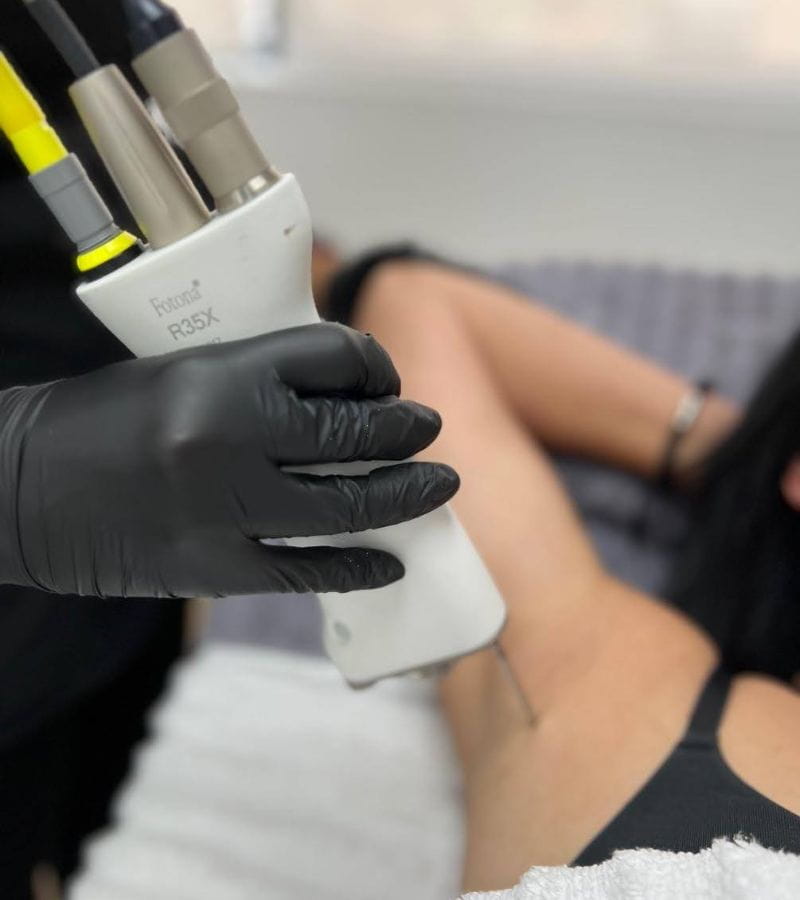
But thankfully, modern medical-grade lasers, like those used at professional clinics such as NuSkinnovation, are calibrated to precise wavelengths, pulse durations, and energy settings, target melanin safely in the hair without doing damage to the surrounding tissue. Also worth noting is that many, like the devices we use, include cooling systems or skin-contact cooling plates to even further reduce discomfort and to protect your skin.
It’s this level of precision and safety that makes professional laser treatments that much more effective and reliable as opposed to home-use devices or earlier-generation light tools.
What Factors Will Influence Results?
Regardless of the quality of equipment used, there are several factors that influence just how well laser for hair removal will work:
- Hair colour, density, and thickness: for instance, dark and coarse hair absorbs more laser energy due to the higher concentration of melanin.
- Skin to hair contrast: For example, higher contrast, i.e., darker hair on lighter skin, commonly produces better results as the laser can more easily distinguish hair from skin.
- The hair growth phase: As mentioned earlier, thanks to the hair growth phase, the timing and consistency of sessions do matter notably.
- Hormonal and genetic factors: Any condition or hormones that affect hair growth, for example, thyroid, PCOS, etc., can have an influence on regrowth and results over time.
- Proper laser settings and professional execution: Using the wrong wavelength, energy, or incorrect techniques can risk side effects or a drop in effectiveness.
What Does This All Mean If You’re Considering Laser for Hair Removal?
Laser for hair removal is in no way magical; it’s a precise medical treatment that makes use of focused light energy to target hair follicles, and when done properly, the procedure can dramatically reduce unwanted hair without doing any damage to your surrounding hair.
All that being said, it does come with realistic expectations, which include multiple sessions, careful scheduling, and an understanding that maintenance is necessary. The success doesn’t only depend on the technology, but also on the hair and skin characteristics of the person, and of course, the skill of the practitioner.
Myth 1 – Laser for Hair Removal Is Permanent
Basically, the biggest misconception about laser for hair removal is that it eliminates hair forever, with no chance of regrowth. Today, many people still believe that once a follicle has been treated, it’s gone for life.
Of course, this idea has only been fuelled by outdated marketing terminology, those oversimplified fear-mongering-for-engagement TikTok videos, and before-and-after pictures that don’t show the long-term realities.
The Fact
The correct medical terminology or phrase is “permanent hair reduction” and not permanent hair removal.
Laser energy does damage to the follicle, just enough to significantly reduce or halt growth. While some follicles are destroyed, others merely become inactive for a long time. Any hormonal changes, medication, pregnancy, menopause, genetics, and conditions like PCOS or thyroid disorders can reactivate dormant follicles.
Myth 2 – Laser Doesn’t Work on Darker Skin
While the older IPL systems did struggle with higher melanin levels, naturally, this led to the misconception that laser for hair removal isn’t safe or effective for dark skin.
The Fact
Today’s lasers, especially the Nd: YAG Technology we use at NuSkinnovation, are specifically designed for the treatment of darker skin tones. The wavelengths of the laser can bypass the surface pigment and target follicles with precision, reducing the risk of pigmentation issues or burns.
Myth 3 – Laser Hair Removal is Too Painful
Many people compare it to waxing, or they’ve seen dramatic reactions online, and thus they assume that laser for hair removal is extremely painful.
The Fact
The reality is that many clients describe the sensation of laser hair removal as a quick, mild sting, which is far less intense than waxing or any other hair removal procedure. As mentioned earlier, today’s modern laser devices come with built-in cooling technology that protects your skin and minimizes discomfort.
Myth 4 – Laser for Hair Removal is Only for Women
Today, there’s still an ever-present perception that laser for hair removal is mainly for women, especially since most advertising historically only targeted female clients.
The Fact
Of course, this is silly and not true, and today lasers are becoming increasingly popular among men who also desire smoother skin, fewer ingrown hairs, and easier grooming. For men, areas such as the back, chest, neck, and beard line respond extremely well to laser treatments.
Myth 5 – Laser Hair Removal is Unsafe and Damages Skin
Another myth, thanks to stories about burns and pigmentation issues, has led many people to believe that laser for hair removal is risky or harsh for your skin.
The Fact
Today’s medical-grade lasers, when they are used by trained professionals, are safe, precise, and designed to protect your skin. The odd few side effects are usually mild and temporary, such as slight redness or warmth.
Myth 6 – At-Home Devices Work Just as Well as Professional Laser Systems
Since the market was flooded with at-home devices, and ones that also utilise light, many people assume that they deliver the same results as a clinic-grade laser for hair removal.
The Fact
The harsh truth is that these home devices are low-powered IPL tools. While they can halt regrowth temporarily, they are a far cry from the depth, precision, and long-term reduction that is possible with proper, medical-grade equipment and professional operators. Not to mention, they’re also riskier for people with darker skin tones thanks to the uncontrolled energy output that home devices provide.
Why Does Professional Treatment Matter?
There are four core reasons why you should opt for professional laser for hair removal:
- Stronger, targeted light wavelengths
- Much better long-term hair reduction
- A lowered risk of burns or pigmentation
- Custom settings for all kinds of skin and hair
Of course, at-home devices can help you with maintenance, but they can never replace the results of professional laser technology.

Understanding the Facts = Better Laser for Hair Removal Results
With laser for hair removal, misinformation is commonly the biggest barrier to getting the best results. All these myths about pain, permanence, and suitability can foster unnecessary hesitation and unrealistic expectations from treatments.
The reality? Modern laser technology is safe. It’s also effective and capable of giving you long-term hair reduction when used properly. But, understanding exactly how laser for hair removal works, and what affects the outcomes, allows anyone to approach treatment with confidence. Your results will depend on core factors such as your skin type, hair colour, hormonal balance, consistency, and the quality of the laser system used, and of course, the person administering it.
When you choose a professional clinic, like NuSkinnovation, with trained clinicians and top-tier, medical-grade equipment, it makes a world of difference, and with the correct guidance, realistic expectations, and a treatment plan tailored to you, laser for hair removal can be a reliable, long-term solution for getting smoother skin and reducing the regrowth of your unwanted hair.
The ball is in your court, but if you’re still unconvinced, be sure to visit our website, take a look at our other blogs, and when you’re ready for sexy, smoother skin, give us a shout, and book your consultation with one of our expert team members to receive expert advice, personalised treatment, and safe, effective laser hair removal, designed for your skin and your personal goals.